
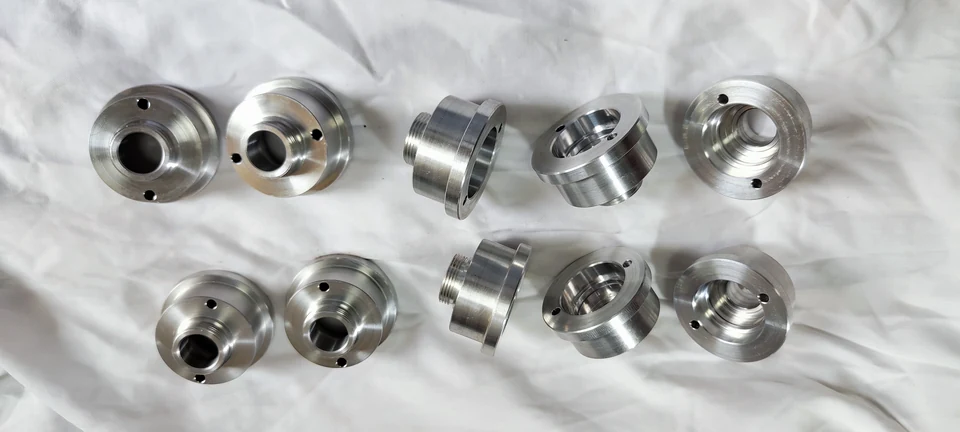
Which hydraulic parts can you submit for review?
CNC turning suits components defined mainly by bores, outside diameters, faces, grooves, shoulders and threads. The examples below show drawing details to provide for hydraulic applications. We assess each design individually; suitability depends on geometry, material, tolerances, finish and inspection requirements.
- Gland-style parts and threaded end components
- Show the rod bore, seal grooves, locating diameters, mating threads and assembly faces. Mark lead-in chamfers and edges that contact seals.
- Pistons and grooved rotational parts
- Identify outside diameters, bores, groove width and position, and relevant seal or wear-ring details. Specify the required surface finish.
- Bushings, sleeves and spacers
- Specify the inside and outside diameters, length, wall thickness and mating fits, together with material and finishing requirements.
- Threaded components and locating pins
- Provide thread specifications and gauge requirements, or the locating diameters, shoulders and retention features needed for assembly.
For other rotational components, see our CNC turning services and part-selection guide.
What drawing details matter around seals and mating parts?
Hydraulic components often depend on the relationship between several features rather than one isolated dimension. A bore may guide or locate another part, an outside diameter may fit a tube or housing, and a groove may hold a seal or wear ring. Thread fit, shoulder position and end-face quality can also affect assembly.
The drawing should identify critical diameters, fits, seal-related grooves, locating faces and mating threads. If the component works with an existing rod, tube, seal or housing, sharing mating dimensions or assembly information helps explain the functional requirement.
Materials and surface requirements
Material choice depends on load, wear, corrosion exposure, pressure-related design requirements, sliding contact and the surrounding assembly. Steel, stainless steel, brass, aluminium and other specified metals may be considered where appropriate, but the required grade should be confirmed from the engineering drawing or application requirement.
Plating, coating, blackening, passivation, heat treatment and machined surface finish can affect final dimensions and fit. These requirements should be included before sampling. Seal-contact, sliding and visible surfaces should be clearly marked so machining and inspection priorities can be reviewed.
Grooves, threads and edge control
Seal grooves and retaining grooves require complete dimensional information, including width, diameter, position and edge condition. Threads should include the standard, nominal size, pitch, fit class, length and any gauge requirement. Reliefs, lead-in chamfers and shoulder clearances should also be shown where they affect assembly.
Deburring is especially important around grooves, threads and edges that may contact seals or mating parts. The drawing should state whether sharp edges must be broken and whether any surfaces need protection during packing.
Inspection for repeat supply
Inspection should focus on the features that control fit and function. Typical checks may include bore and outside diameters, groove dimensions, shoulder positions, overall length, thread fit, face quality, burr condition and surface appearance. The exact inspection plan depends on the drawing and agreed requirements. Our turned-parts inspection guide explains how to specify critical features and requested records.
For recurring orders, approved samples, stable drawings, recorded critical dimensions and agreed packing help maintain consistency between batches. Any change to material, treatment, seal geometry or mating components should be reviewed before the next production run.
What should you send for a hydraulic component quote?
- Current drawing and revision: include tolerances, critical dimensions, mating fits, seal grooves, thread details and edge conditions.
- Material and finish: specify the grade, machined surface requirements, treatment and any dimensions that apply after finishing.
- Quantity and sample status: state the initial quantity, likely repeat quantities and whether a sample or drawing revision needs approval.
- Inspection and packing: identify required records and any surfaces that need protection in transit.
- Delivery requirements: include the destination country, postcode and required date so freight and timing can be reviewed.
See the CNC quotation checklist for file preparation. Describe whether the component is for a new design, replacement or repeat supply.
Can you quote from a worn sample?
Photos, measurements and a sample brief can support an initial suitability review. Wear may obscure the intended dimensions, so confirm the production drawing, material and functional requirements before repeatable manufacture.