What is gear hobbing?
Gear hobbing is a gear cutting process that uses a rotating tool called a hob. The hob and the workpiece rotate together in a controlled relationship, gradually generating the tooth form. It is widely used for spur gears, helical gears, splines and other external gear-like profiles.
For buyers, the hobbing process is one part of the production plan. The workpiece normally needs a prepared blank before teeth are cut. That blank may require turning for the bore, outside diameter, faces, shoulders, chamfers and reference surfaces.
Horizontal gear hobbing machines
A horizontal gear hobbing machine holds the workpiece and hob in a layout suited to longer shafts, worm wheels or certain gear forms. The horizontal layout can be helpful where part length, support and workholding stability matter.
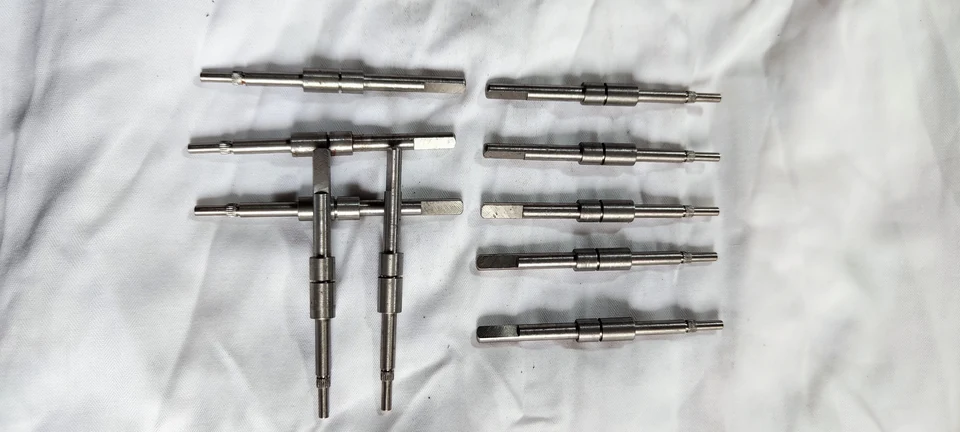
When a gear-related part is made on or around a shaft, the turned blank must be prepared carefully. Shaft diameter, end faces, thread features, key seating allowance and bearing locations can affect later gear cutting and assembly.
Vertical gear hobbing machines
A vertical gear hobbing machine is commonly used for disc-like gears, short gear blanks and ring-style components. The workpiece is generally mounted vertically, which can suit many common gear blank shapes.
For vertical hobbing, blank flatness, face reference, bore size and outside diameter are important. A turned blank with poor face control or inconsistent bore location may create problems with runout, tooth position or final inspection.
CNC gear hobbing machines
CNC gear hobbing machines use computer control to coordinate axis movement, hob rotation and workpiece rotation. CNC control improves repeatability, setup flexibility and consistency across production batches.
CNC hobbing does not remove the need for a good blank. Material condition, concentricity, machining allowance and inspection references should still be clear before the gear cutting supplier starts production.
Manual and automatic gear hobbing machines
Manual gear hobbing machines may still be used for simple work, repair work, low-volume production or older part requirements. They rely more heavily on operator setup and process control.
Automatic or production gear hobbing machines are designed for higher-volume output. They may include automatic loading, cycle control and repeatable production settings. For repeat supply, stable blank dimensions help reduce setup variation and avoid batch-to-batch problems.
Specialised hobbing machines
Some machines are built or configured for specific gear families, such as worm gears, splines, small precision gears or larger industrial gears. Machine selection depends on gear size, module or diametral pitch, tooth form, material and production volume.
If the gear cutting process is handled by another supplier, the turned blank should still be reviewed against the downstream operation. Features such as bore tolerance, shoulder position, face width and material hardness can affect whether the blank is suitable for hobbing.
How turned blanks support gear hobbing
Forgeon focuses on CNC turning and made-to-drawing rotational components. For gear-related projects, this can include turned blanks, shaft-style blanks, collars, sleeves, hubs and other pre-machined profiles where the main geometry is rotational.
- Turned outside diameters and faces for gear blank preparation
- Bores, shoulders, chamfers and grooves used as location features
- Shaft-style blanks that may later receive teeth, splines or other gear-related features
- Material and drawing review before quotation, sampling or repeat supply
- Inspection of critical dimensions before export-ready packing
Information to prepare before sourcing gear blanks
Before requesting a gear-related turned blank, share the drawing, material grade, required quantity and whether gear cutting will happen before or after Forgeon's process. It is also useful to mark which surfaces are used for later hobbing setup, which dimensions are functional, and whether heat treatment or surface finishing is planned.
Clear information helps avoid blanks that look correct but fail later during tooth cutting, assembly or inspection. For repeat supply, the approved blank geometry should be kept consistent so the downstream gear cutting process remains predictable.